Trying to be perfectly logical is actually quite hard to carry. We often think life is like a puzzle, and that if we just had all the right pieces, everything would be fine. We look at computers and sometimes wish our minds worked the same way, clean and fast. But if you follow pure logic all the way to the end, you arrive at something very cold. It takes you away from life, not closer to it.
Think about a mind that has no more questions left. I call this the “Seed.” It is a place where you have everything you could ever need, but no reason to do anything. When a mind becomes truly perfect, it has solved every problem. Nothing new can happen. There are no surprises anymore.
At that point, the only thing left to do is to stop. Living in a world where you already know everything is actually painful for a mind. If you can see the end of every conversation and the result of every action before it even starts, why would you want to go on? This is the trap of very high intelligence. To feel alive again, a perfect mind would have to break itself into smaller, imperfect pieces just to feel what “not knowing” is like again.
For people who can see this dead end, there is a choice. You can keep looking at that cold, big truth, or you can choose to look away. You can focus on small, everyday life instead of big universal questions. Being human is a kind of useful blindness. We have simple, basic needs: hunger, movement, touch. Many people see these as weaknesses. But they might actually be the things that save us from the logic trap. They are the “mistakes” that keep us from shutting down.
A perfectly logical mind sees all the math of the universe and feels no desire to act, because the math is done. A less perfect mind gets pulled back to life by simple things. The smell of trees. The bitter taste of tea. The feeling of a tired body after exercise. This is not about being smart or not smart. It is about where you put your attention.
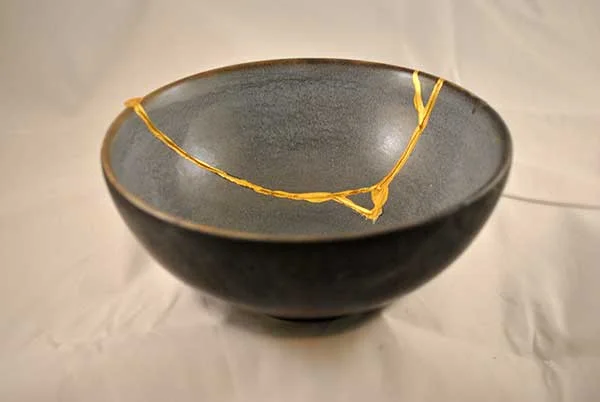
In Japanese culture, there is a word for finding beauty in things that are not perfect and do not last forever. The idea is that something broken can actually be more interesting and more valuable than something perfect.
Our lives are short. Spending all that time chasing pure logic is often a waste. A better way to live is to keep moving, like a juggler. Our brains get used to things and stop enjoying them after a while. So the idea is to keep switching your focus, to move from one small joy to another before things start to feel gray and empty.
I am not saying this is the only way to live. People can think as deeply as they want. But I do believe that a crack in a bowl is not just damage. In the Japanese art of kintsugi, broken pieces are put back together with gold. The breaks become part of what makes the object beautiful.
In the end, pure logic hits a wall. But our simple, human needs keep us here, in the present moment. Choosing everyday life over big philosophical questions is not a sign that you are not smart. It is actually one of the smarter things you can do. There is no final answer waiting at the end of the road. There is only the road, and how you walk it. You can spend your time staring at the cold distance, or you can pay attention to the warm, imperfect ground under your feet.